

Where Does Research Go After the Readout?

The readout went well. Stakeholders nodded, someone said "this is so helpful," and the deck landed in a shared drive with a very sensible file name.
Six months later, a feature ships that contradicts half of what you found. Was the research considered and overruled? Ignored? Never seen at all? Nobody can say.
That's the real problem. Research getting overruled happens, and sometimes it should. What shouldn't happen is nobody understands why. Somewhere between the readout and the roadmap, the trail went cold.
Share POst


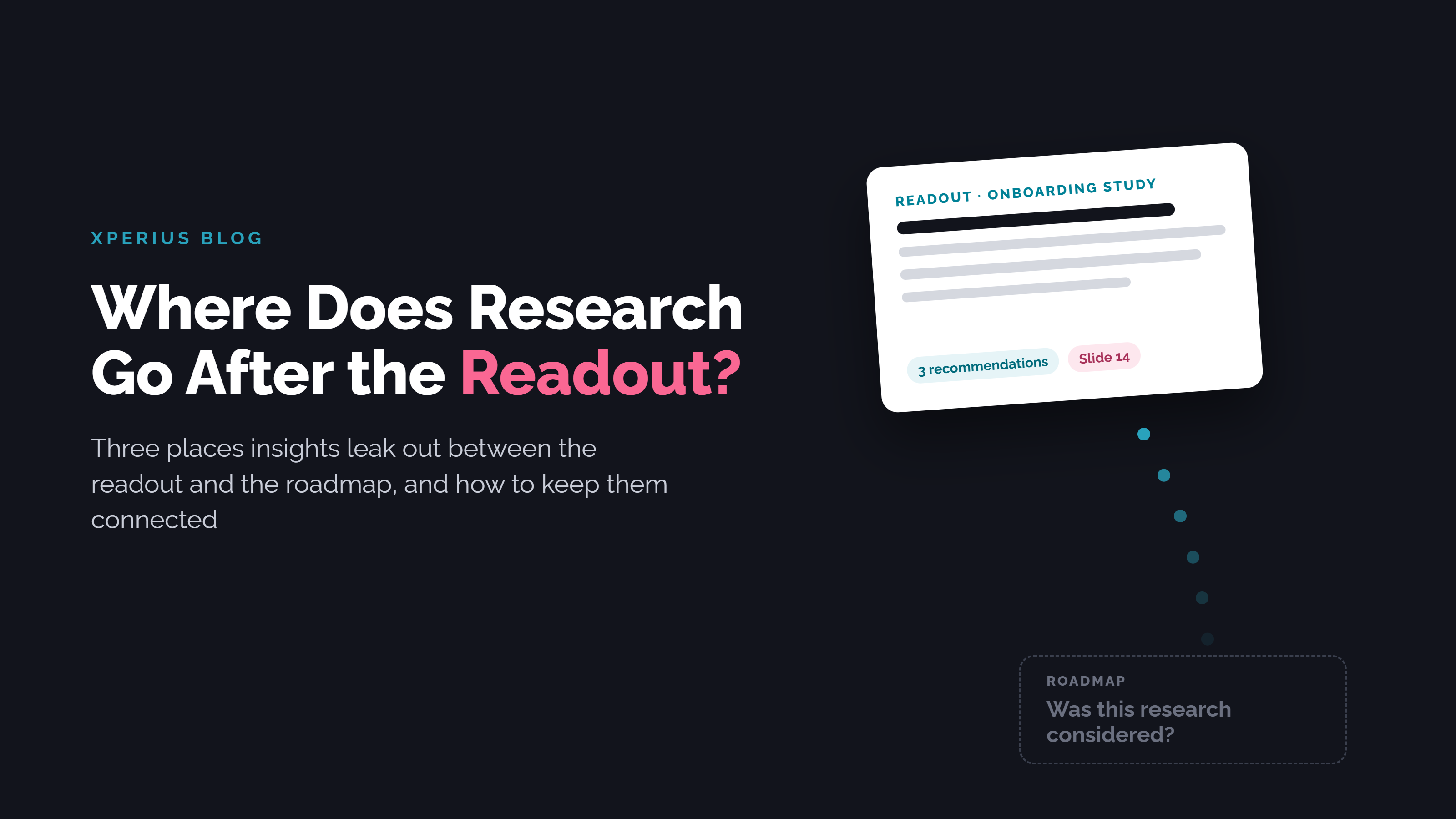

The gap has a name

We call it the research-to-decision gap: the distance between what a team learns and what it actually decides.
Most research teams are measured on what they produce. Studies completed, reports delivered, insights logged. Those are easy to count, so they get counted.
But nobody funds research for the reports. They fund it because they want better decisions. And the moment a study wraps, what the research was for becomes the hardest thing to see.
Ask a research leader which product decisions their team shaped last quarter. You'll get a thoughtful pause, a couple of good anecdotes, and a sense that the honest answer is "more than we can prove."
Where insights drop off
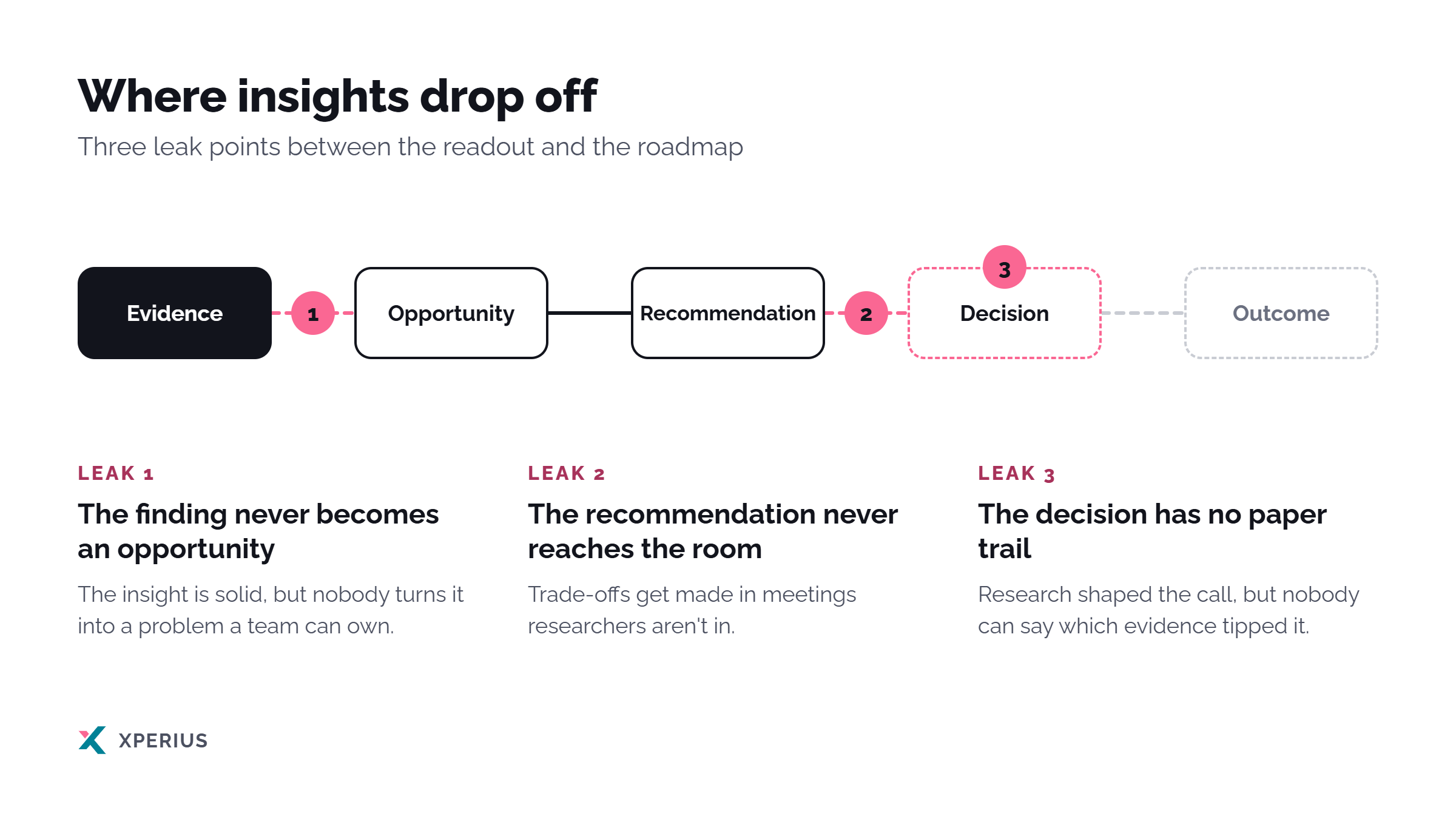
Research rarely fails in one dramatic moment. It leaks out at predictable points.
A finding never becomes an opportunity. The insight is solid: users keep getting lost in setup. But nobody turns it into a problem a product team can own, so it stays an observation on a slide deck.
A recommendation never reaches the room. Prioritization happens in planning meetings, roadmap reviews and Slack threads that researchers often aren't in. If the recommendation isn't there when trade-offs get made, it may as well not exist.
A decision gets made with no record of why. Even when research does shape a call, the link rarely gets written down. Three months later, nobody remembers which evidence tipped it or what argued against it.
Each leak is small. Together, they explain why teams keep re-running studies they've already done, and why research impact is so hard to show.
Why storing research isn't enough
The usual fix is a repository. Put everything in one place, tag it well, make it searchable.
That helps. Findable research beats research buried in someone's drive. But a repository answers "what do we know?" It doesn't answer "what did we do about it?"
A beautifully organized insight library can still have zero connection to the roadmap. You can find the study. You just can't see what it changed.
What connected research looks like

Closing the gap means treating research as the start of a chain, not a finished deliverable. Every link stays visible:
- Evidence: the quotes, observations, and data from the research itself.
- Opportunity: the problem or need that evidence points to.
- Recommendation: what the research team thinks should happen.
- Decision: what the team chose, and why.
- Outcome: what changed as a result.
Two details matter here.
The chain includes evidence that challenges a decision, not just evidence that supports it. Deciding against the research is fine. Deciding without anyone having seen it is not.
The chain also keeps going after the decision. If you can't see what happened next, you can't show research had an impact, and you can't learn from the calls that didn't pan out.
That's the thinking behind Evidence Chains in Xperius. Every decision stays connected to the research behind it, so anyone can trace what informed it and what came of it.
Three things to try this week
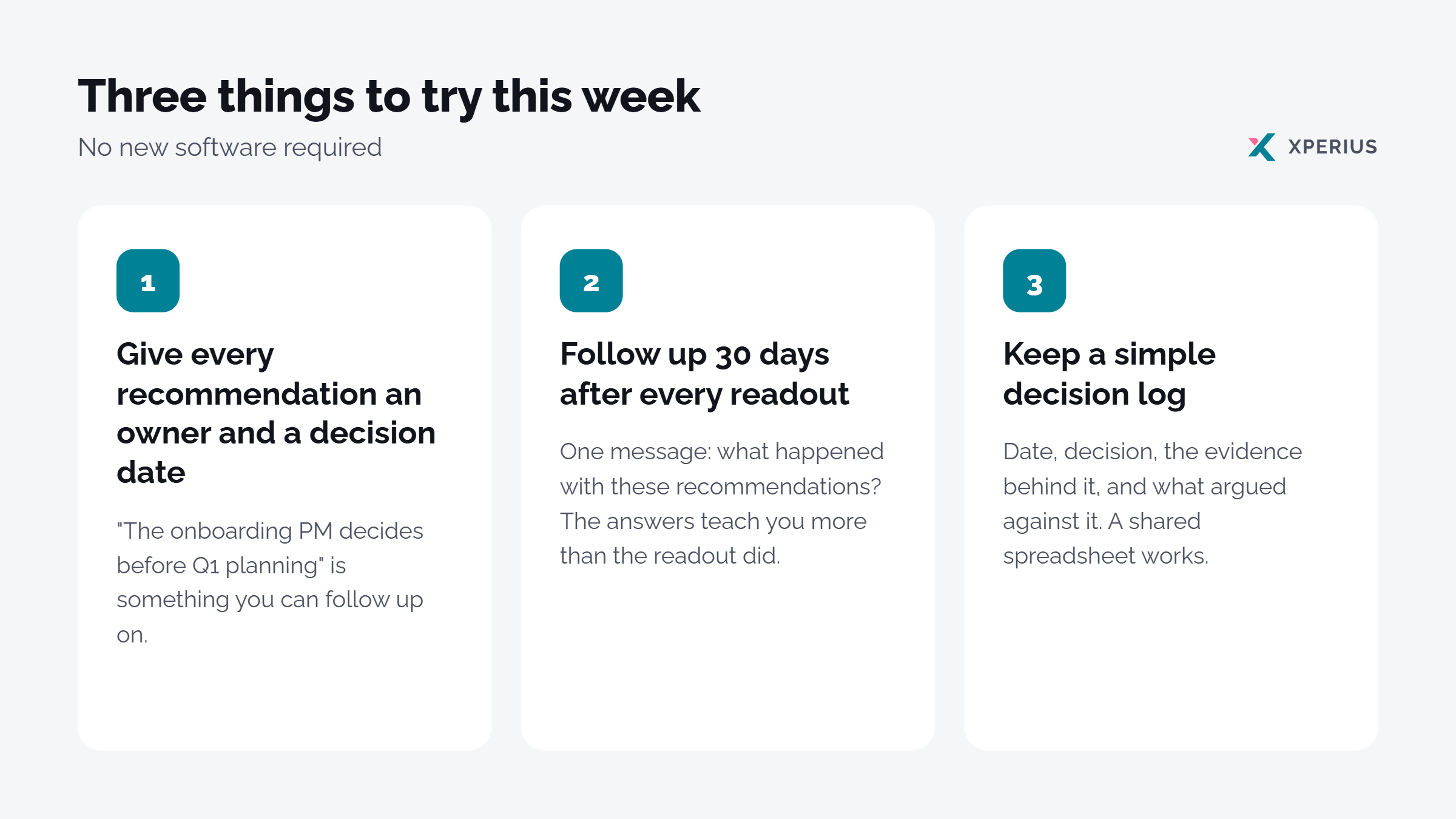
You don't need new software to start closing the gap. (Slightly awkward coming from a software company, we know.)
- Give every recommendation an owner and a decision date. "We should simplify onboarding" is a suggestion. "The onboarding PM decides before Q1 planning" is something you can follow up on.
- Follow up 30 days after every readout. One message: what happened with these recommendations? The answers will teach you more than the readout did.
- Keep a simple decision log. Date, decision, the evidence behind it, and what argued against it. A shared spreadsheet works. The point is writing the reasoning down while people still remember it.
The readout was never the finish line
Research earns its keep in the decisions that follow it. When those decisions stay connected to the evidence, researchers can show their impact, product teams can see the reasoning, and nobody has to wonder why a feature exists.
Xperius connects research to decision-making. See how it works for your team.
Xperius is a research intelligence platform closing the gap between insight and decision
If your team is spending time and money re-running research you've already done, it's time for a new approach. Xperius can help you better organize, share, and activate your research.

