

For years, research teams have been told that the solution to lost insights is relatively simple: put everything in one place.
Interview notes, research reports, customer quotes, and presentations all get moved into a centralized research repository. Make that repository searchable, give stakeholders access, and suddenly the organization has a reliable home for everything learned about customers.
At least, that was the idea.
But many organizations have now spent years building repositories full of research, and they’re still hearing the same questions:
“Have we ever researched this before?”
“Where did that insight come from?”
“Is this still true?”
“Did anything ever happen because of this?”
Research repositories worked. That's the problem.



Search is an essential part of research infrastructure. Teams need to be able to locate previous work quickly. But retrieval is only the beginning. Most repositories are naturally organized around reports.
The challenge is that product decisions rarely happen at the report level.
A product manager usually isn’t asking, “What did Study #UX-147 conclude?”
They’re asking something closer to:
“Do we have enough evidence to prioritize this problem?”
Answering that question likely requires much more than a single research report. The relevant evidence might include findings from five studies, three recent customer conversations, a recurring support issue, an analytics trend, and an insight originally identified 18 months ago.
No single report contains the answer.
The answer exists across the entire body of evidence.
And, that changes the role research infrastructure needs to play.
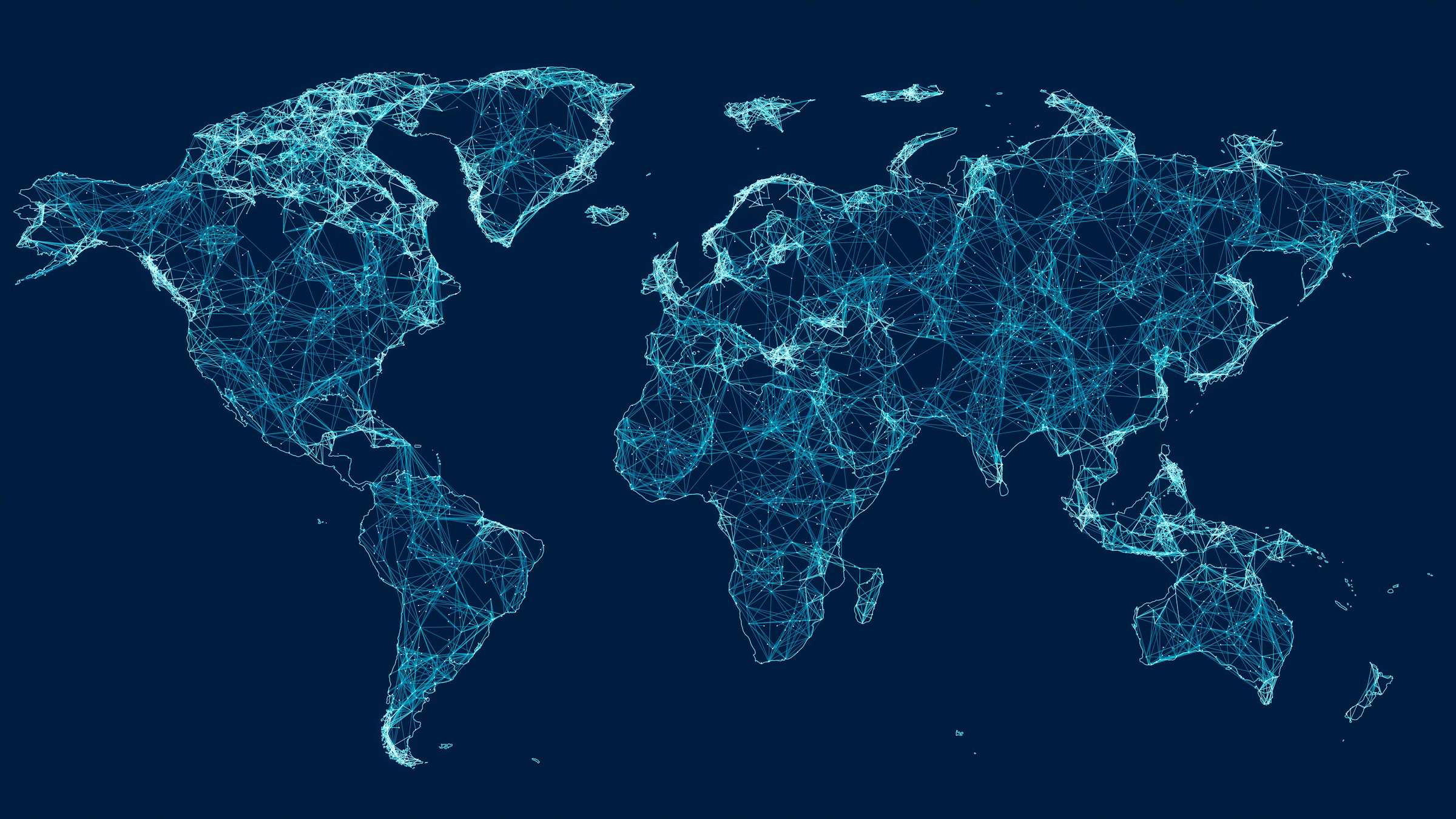
Instead of only helping someone retrieve a finding, a knowledge map should help teams understand how that finding relates to everything else the organization knows about the same problem.
Does another study support it? Has newer evidence challenged it? Has the same issue appeared across different customer segments? Is there quantitative data pointing in the same direction? Has the organization already tried to solve it?
The value isn’t simply in finding more research. It’s in seeing the relationships between the evidence.
Consider two organizations that have conducted the exact same amount of research.
Both have completed dozens of interviews, usability studies, surveys, and exploratory projects. Both have documented their findings. Both have searchable repositories.
In the first organization, every study exists primarily on its own. When someone wants to understand a customer problem, they search for relevant studies, open several reports, compare the findings themselves, and try to reconstruct the larger story.
In the second organization, evidence from those studies is connected around the customer problems, opportunities, themes, and decisions it informs. Teams can see not only that research exists, but how multiple pieces of evidence relate to one another.
The underlying research may be identical.
The organizational knowledge is not.
This is why search alone has limitations. Search depends heavily on someone knowing what to look for, using the right terminology, and having enough time to interpret what they find.
Connection reduces that burden.
It allows research to become part of an evolving understanding rather than a collection of completed projects.
There’s another challenge with treating research primarily as something we store: products don’t stop moving when research ends.
A researcher identifies a problem. A product team evaluates it. An opportunity gets prioritized. A solution is designed. Something ships. Metrics change. Customers react. More research happens.
The organization keeps moving.
Yet the original research report often contentedly stays exactly where it was when the project ended.
A report might tell you what researchers learned in March. It may not tell you that the finding influenced a roadmap decision in May, that a feature was designed around it in August, or that customer behavior changed after launch in October.
The research captures a moment in time while the product continues evolving around it.
Over time, that disconnect becomes increasingly important.
Teams produce new evidence about the same customers and products, but they don’t necessarily build continuously on what they already know. Insights get rediscovered. Questions get researched again. Old findings are either trusted without enough context or ignored because no one knows whether they still apply.
A true research knowledge map should help preserve continuity between what was learned and what happened next.
An insight shouldn’t only tell you what researchers learned. It should help you understand how that learning evolved into something bigger.
This is where the difference between storage and knowledge becomes especially important.
Organizations conduct research continuously. Every interview, study, experiment, customer conversation, and product outcome has the potential to add to what the company already knows.
But that only happens when new evidence can connect into a larger ecosystem.
Imagine a customer problem first appears during exploratory research. Six months later, a usability study surfaces the same issue. A year later, support tickets begin showing a similar pattern. Another research project finds the problem in a different customer segment.
Logged separately, those are four more things to read. Connected, they're one problem with four independent confirmations — and the organization's confidence should rise accordingly. If new research later contradicts it, that becomes part of the story too.
This is what it means for knowledge to compound.
Research stops being a series of disconnected projects and starts becoming an evolving network of evidence.
Teams no longer have to reconstruct what the organization knows every time a new question emerges. They can begin with the knowledge that already exists, understand the evidence behind it, and add to it.
That can reduce duplicate research, preserve institutional knowledge, and give teams a stronger foundation for product decisions.
More importantly, it changes the value of old research.
Instead of becoming another report buried deeper in a repository with every passing year, previous research can resurface and continue contributing to what the organization understands today.
None of this means research repositories are obsolete.
Storage still matters. Search still matters. Research artifacts still matter.
The distinction is that those things are the foundation of research knowledge infrastructure, not the finish line.
A repository can tell you where a study lives.
A knowledge map helps you understand how the evidence from that study connects to other evidence, what the organization currently believes because of it, what opportunities emerged from it, what decisions it influenced, and what happened afterward.
That creates a much richer chain:
Evidence → Insights → Opportunities → Decisions → Actions → Outcomes
When those connections remain intact, research becomes easier to reuse because teams don’t have to start from the original artifact every time.
Someone evaluating an opportunity six months later can understand why it matters. Someone questioning an insight can see the evidence supporting it. Someone reviewing a product decision can trace the customer knowledge that informed it. And new research can strengthen, challenge, or update what the organization previously believed.
The research remains connected to the work it was meant to influence.
For a long time, the standard for research infrastructure was straightforward: Can our team find the research? While still an important question, it isn’t enough.
As research repositories mature and organizations accumulate years of customer evidence, the better question becomes:
Can our team understand what we know, why we believe it, and what happened because of it?
Those are very different standards.
The next generation of research infrastructure has a harder job. It needs to help organizations connect that work across studies, evidence, opportunities, decisions, and outcomes so that every new piece of research can build on what came before it.
Connecting research preserves understanding.
And when that understanding can grow with every study, every decision, and every outcome, research becomes more than something an organization keeps.
It becomes knowledge the organization can continuously build on.
At its core, a research repository answers one extremely important question:
Where is the research?
That question matters. Centralized access to research is far more useful than digging through numerous tools and folders. But it often doesn’t go far enough.
Once that question is answered, weightier questions emerge:
Those aren’t really storage questions. They’re questions about how research becomes useful.
And there is an important distinction between having access to research and having access to organizational knowledge.
Imagine an organization has conducted six studies over three years with each study focused on a similar theme.
In a traditional repository, those studies may exist as six separate reports. Each has its own title, date, methodology, tags, and metadata. Everything is technically documented and searchable.
Now imagine a product manager begins searching for this topic.
They search the repository using one phrase and find three of the six studies. Another stakeholder searches using different terminology and finds only one. Someone else doesn’t know the research exists at all and commissions a seventh study.
The organization technically has the knowledge.
Functionally, it doesn’t. Everyone has answered their question in a different way, but has only a piece of the bigger picture.
The information exists, but the connections that make that information meaningful are missing.
If your team is spending time and money re-running research you've already done, we'd love to show you what we're building. Beta access is open.


Join our newsletter for ideas worth your attention,
delivered straight to your inbox.
Lorem ipsum dolor sit amet, consectetur adipiscing elit, sed do eiusmod tempor incididunt ut labore et dolore magna aliqua. Ut enim ad minim veniam, quis nostrud exercitation ullamco laboris nisi ut aliquip ex ea commodo consequat. Duis aute irure dolor in reprehenderit in voluptate velit esse cillum dolore eu fugiat nulla pariatur.
Block quote
Ordered list
Unordered list
Bold text
Emphasis
Superscript
Subscript
